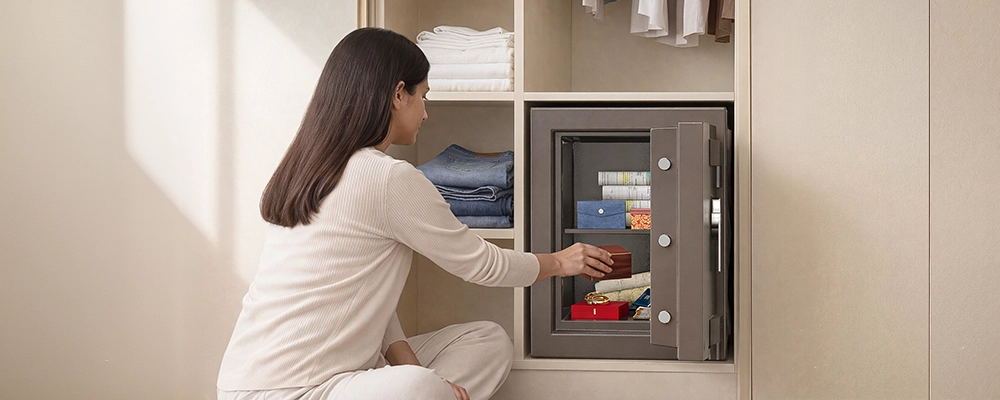
Home lockers, or secure home storage solutions, have become an indispensable part of modern Indian households. While bank lockers are considered a traditional and safe option to secure valuables, they are not accessible at all times ! Apart from 24*7 accessibility, home lockers also offer much-needed security for safeguarding emergency cash and help protect valuables from theft, damage, and loss.
Keeping valuables and important documents within hidden compartments inside cupboards is no longer a secure option. Using mechanical lockers is a better alternative but it does not offer security features that are offered by modern operating lockers (or digital safes).
However, simply installing a locker is not enough. Using a home locker correctly is equally important to maximise its security and efficiency. This blog deep dives into the effective usage of a home locker, so that your valuables remain protected and accessible when needed.
What is the purpose of a locker?
Before you or designated family members start using the locker, it is essential to understand how to use the safe or locker. Homelockers are primarily used for securing valuable items that need protection from theft, damage, or accidental loss. This is irrespective of whether it is a mechanical locker, fingerprint locker, or any form of modern digital locker.
Here are some of the common items can be secured in a home locker:
Using it for essential valuables not only helps with better organization but also results in better accessibility.
How to choose the ideal location for the locker?
Knowing the best usage of the locker is only half the job done. The remaining half is identifying the proper placement of the locker. Regardless of the design of home, the locker should be placed in a location that provides both controlled and secure access.
As a rule of thumb, avoid placing the home locker in areas that receive frequent visitors. Here are some of the common places that offer the required security and discretion for placing a home locker:
In order to ensure the longevity of the internals of the digital locker, it is recommended to place the locker in a dry and well-ventilated area. This helps maintain the long-term performance and usability of lockers.
In a nutshell, placing the home locker in a concealed area minimizes the chances of any unwarranted attention. While the locker should not be placed in high-traffic areas, it should still be easily accessible to the respective members of the family.
How to organize items in a home locker?
Getting things in order is crucial to making the most of your Home Locker. When everything has its place, you can access what you need quickly and keep stress at bay. You would not want to spend more time searching for an item that is securely placed in the locker.
Here are some of the best practices that can help in keeping the home locker organized all the time:
Keep important PIN Numbers in a sealed envelope for emergency situations, but outside the locker, just in case. In all possibilities, avoid overfilling the locker, otherwise you may spend unnecessary time searching for important items stored inside it.
How to Secure Your Locker Using the Locking Mechanism
Unlike traditional lockers, modern home lockers are equipped with various locking systems, including key locks, digital keypads, biometric access, face recognition, and dual access mode options that combine any two access systems. Additionally, these digital lockers come with an emergency mechanical override key and a USB port,
allowing access in case of an emergency, such as forgetting your password or if the battery is dead.
Since a home locker secures the stored items (e.g., valuables, cash, etc.), it is important to thoroughly understand the security mechanisms offered by the locker. These mechanisms are mentioned in the user manuals that give full details on how to use the locker, its multiple features and how to operate and set the locker ready for use and unauthorised access attempts)
Many digital lockers offer a feature of non-volatile memory where the digital locker is smart enough to save the code (i.e., passcode, finger print, etc.) in a secure memory ensuring that the code is secure and accessible even in the event of a power outage. The locker code should be kept as confidential as your bank locker key or personal passwords.
Here are some of the best practices that should be diligently followed when using a locker:
Lastly, do not overcomplicate things by choosing a password that is too difficult to memorize or remember. Avoid simple sequences like birthdays or repeating numbers.
Why periodically review locker contents?
Though home lockers are used for secure storage, you need to make sure that the locker does not remain untouched for longer periods. Cultivate the good habit of reviewing the contents periodically.
Here is a small checklist that can be followed in the review process:
Check all available locker as activating these will help you to avail extra layers of security like Inbuilt I-buzz alarm, door open alert, auto freeze function, Relocking mechanism, master codes for emergency use, Audit trail, no. of passcodes and biometric that can be set. Regular checks help in noticing early signs of moisture, corrosion, or wear affecting the stored items. Such practices contribute significantly to the overall safety in the long run.
Conclusion
A home locker is one of the ideal ways for keeping important jewellery and valuables secure all the time. However, the true potential of the locker can be harnessed by leveraging its features and using it correctly and responsibly. Proper placement, organized storage, secure access, and prompt monitoring helps ensure that the locker serves its purpose effectively.
Frequently Asked Questions (FAQ)
It all depends on your requirement in terms of storage, security, and overall budget. Since home lockers are available in different sizes, colors, and security mechanisms; it is recommended to choose the one that fits your needs.
Place the home locker at a location that offers security and discretion. Understand the security features by reading the manual, change the company passwords and reset your person access codes so that you can make the best use of the same.
Choose a secure place that does not receive frequent visitors. It could be either your bedroom, inside a Built-In Wardrobe, within concealed storage spaces, amongst others.
There are various types of lockers based on volume of the locker, the locking mechanism, the colour of the locker and the strength of the locker. With this there are locker made to address the demand of different targeted customers like for gifting, kids, hospitality, banks, jewellers, corporates etc.
Understand the locker security mechanism and store items as per the storage capacity and strength of the locker to protect what matters.
To properly use a locker lock, ensure that the locker door is fully closed before engaging the lock. Enter the correct keycode, use the fingerprint scanner, or turn the key depending on the type of lock installed. Do Not bang the door of the home locker incase if there are alignment issues
Losing the locker key, emergency access key, forgotten password user or master access code, corrosion in locking mechanism, door alignment issues, moisture or humidity are some of the common problems you might face when using a locker.
Avoid using a home locker if you have not properly installed or anchored it, as it becomes easier to tamper with. It is important to install or anchor the locker correctly for safety of your valuables.
The overall lifespan depends on the usage and wear, maintenance, and the conditions in which the locker is kept.
Most Godrej digital locks are equipped with built-in reset mechanisms that allow users to change or reset the password securely. Please refer to the product instruction manual or Godrej Home Lockers website for more information.
Copyright © 2026. godrejsecure.com All Rights Reserved
Site hosted and managed by Brandbuddiez Technologies Pvt. Ltd.


0 COMMENTS